
India’s latest Export Import Policy (2023-28) reflects the government’s strategic vision to boost exports and position the country as a global manufacturing and services hub. The policy offers a range of incentives designed to support exporters, reduce costs, and enhance competitiveness across various sectors.
This article provides a detailed overview of the incentives available under the Export Import Policy 2023-28, including the Duty Drawback scheme, and highlights how Indian companies are leveraging these incentives to drive exports.
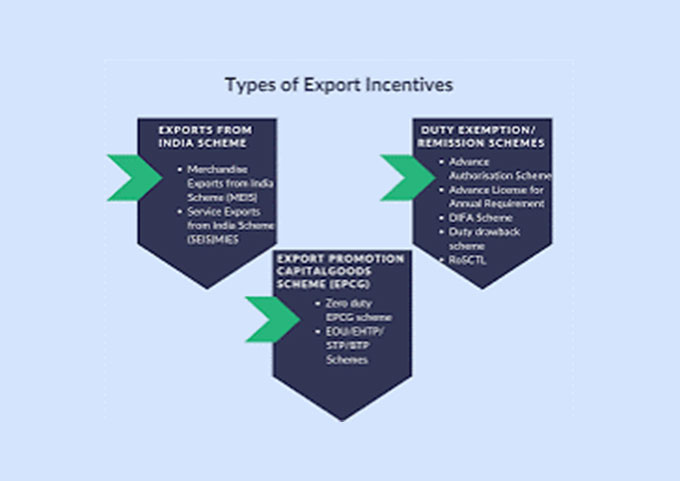
The Export Import (EXIM) Policy 2023-28 includes a variety of incentives aimed at encouraging exports from India. These incentives range from duty exemptions and tax benefits to financial assistance and infrastructure support. Here’s a breakdown of the key incentives.
The RoDTEP scheme was introduced to replace the Merchandise Exports from India Scheme (MEIS). Under RoDTEP, exporters are reimbursed for the embedded central, state, and local duties and taxes that are not refunded under any other mechanism. The scheme covers various sectors and aims to make Indian exports competitive by ensuring that exports are not burdened with domestic taxes.
Example: Companies like Trident Group, a major player in the textiles industry, leverage the RoDTEP scheme to enhance their competitiveness in global markets. By receiving rebates on duties and taxes, Trident Group can offer their textiles at more competitive prices internationally, thus expanding their market share.
The PLI scheme offers financial incentives to manufacturers in key sectors, including electronics, pharmaceuticals, and automobiles, for incremental sales of goods manufactured in India. The scheme is designed to attract investment in manufacturing, boost export potential, and create large-scale employment.
Example: Companies like Trident Group, a major player in the textiles industry, leverage the RoDTEP scheme to enhance their competitiveness in global markets. By receiving rebates on duties and taxes, Trident Group can offer their textiles at more competitive prices internationally, thus expanding their market share.
The Advance Authorization Scheme allows exporters to import raw materials, components, and inputs without paying customs duties, provided that the finished goods are exported. This scheme helps in reducing the cost of production, making Indian products more competitive in the global market.
Example: Bharat Forge, a major exporter of automotive components, uses the Advance Authorization Scheme to import raw materials duty-free. This allows the company to manufacture high-quality components at a lower cost, which are then exported to global automotive markets, particularly in Europe and North America.
The EPCG scheme allows exporters to import capital goods at zero customs duty, provided that they commit to exporting goods worth a specified multiple of the duty saved within a given time frame. This scheme encourages technological upgradation of the Indian manufacturing sector.
Example: Hero MotoCorp, the world’s largest two-wheeler manufacturer, has utilized the EPCG scheme to import advanced machinery and technology. This investment has enhanced their production capabilities, allowing Hero MotoCorp to export motorcycles and scooters to markets in Africa, Latin America, and Southeast Asia.
The MAI scheme provides financial assistance to exporters, export promotion organizations, and trade bodies to promote exports through market research, participation in international trade fairs, and other promotional activities. The scheme is particularly beneficial for exploring and entering new markets.
Example: The Tea Board of India has leveraged the MAI scheme to promote Indian tea in new and emerging markets, such as Russia, Iran, and CIS countries. Financial support for trade fairs and buyer-seller meets has enabled Indian tea exporters to expand their presence and increase their export volumes in these regions.
The Interest Equalization Scheme offers a subsidy on the interest rate charged by banks on pre- and post-shipment export credit. This scheme is aimed at reducing the cost of credit for exporters, particularly in the MSME sector, thereby enhancing their competitiveness.
Example: MSME exporters in the handicrafts sector, such as Vijay Exports, have benefited from the IES by accessing cheaper credit. This has enabled them to manage their working capital more efficiently and reduce overall costs, making their products more competitive in international markets.
The DFIA scheme allows exporters to import duty-free inputs that are required for the manufacture of export products. The scheme is particularly useful for exporters of value-added products, as it reduces the cost of inputs, thereby enhancing the competitiveness of the final product.
Example: ITC Ltd., a leader in the food processing industry, utilizes the DFIA scheme to import duty-free agricultural inputs used in the production of processed food products. This enables ITC to export competitively priced processed foods to markets in the Middle East and Africa.
The TMA scheme provides assistance for the international transportation of agricultural products. This scheme is particularly beneficial for exporters of perishable goods, as it helps reduce logistics costs and makes Indian agricultural products more competitive in the global market.
Example: Exporters of fresh fruits and vegetables, such as Mahindra Agribusiness, have utilized the TMA scheme to reduce transportation costs. This has enabled them to export fresh produce to distant markets in Europe and the Middle East, while maintaining competitive pricing.
SEZs and EOUs offer a range of incentives, including tax exemptions, duty-free import of capital goods and raw materials, and relaxed labor laws, to encourage exports. These zones are designed to create a favorable environment for export-oriented manufacturing and services.
Example: Infosys, one of India’s leading IT services exporters, operates extensively within SEZs. By taking advantage of the tax benefits and infrastructure support offered by SEZs, Infosys has been able to expand its global IT services export business, serving clients across North America and Europe.
TIES provides financial assistance for the development of export infrastructure such as cold chains, dry ports, and testing laboratories. This scheme aims to address the infrastructural gaps that hinder India’s export competitiveness.
Example: Agricultural exporters in Gujarat have benefited from TIES, which has helped develop cold storage facilities and improved logistics infrastructure. These improvements have enabled exporters to maintain the quality of perishable goods during transit, enhancing their competitiveness in global markets.
The Duty Drawback Scheme allows exporters to receive a refund of duties paid on imported inputs used in the manufacture of export goods. This scheme is crucial for reducing the overall cost of production and enhancing the competitiveness of Indian exports.
Example: JSW Steel, one of India’s largest steel producers, has effectively utilized the Duty Drawback Scheme to reduce the cost of exporting steel products. By obtaining refunds on duties paid for imported raw materials, JSW Steel can offer competitively priced steel in international markets, particularly in Southeast Asia and the Middle East.
Sun Pharma, India’s largest pharmaceutical company, has leveraged the PLI scheme to expand its manufacturing of active pharmaceutical ingredients (APIs). The incentives provided under the scheme have enabled Sun Pharma to enhance its production capacity, which in turn has increased its exports to markets in North America and Europe, where there is high demand for generic medicines.
Mahindra & Mahindra, a leading exporter of utility vehicles and tractors, has utilized the Advance Authorization Scheme and EPCG scheme to import critical components and machinery duty-free. This has reduced the cost of production and allowed Mahindra to price its vehicles competitively in global markets, including Africa and South America.
Hindustan Unilever Limited (HUL), a subsidiary of Unilever, has taken advantage of the DFIA and RoDTEP schemes to boost its export of personal care and food products. By importing duty-free inputs and receiving rebates on domestic taxes, HUL has been able to offer its products at competitive prices in markets across Southeast Asia and Africa.
The Advance Authorization Scheme and the Duty-Free Import Authorization (DFIA) Scheme are both key export incentive schemes under India’s export-import policies, designed to promote exports by allowing duty-free import of inputs required for export production. However, they have some significant differences in terms of their objectives, operation, and eligibility criteria.
The Advance Authorization Scheme allows manufacturers or exporters to import raw materials, components, and other inputs without paying customs duties, provided these inputs are used in the production of goods that will be exported.
The primary objective is to reduce the cost of production for exporters by exempting them from paying customs duties on imported inputs, thereby making their products more competitive in the global market.
Both manufacturers (including those in the service sector) and merchant exporters tied to supporting manufacturers are eligible under this scheme.
Exporters can avail of this scheme for physical exports, deemed exports (such as supplies to special economic zones or under international competitive bidding), and intermediate supply exports.
The scheme typically requires a minimum value addition to be achieved by the exporter, which is calculated based on the difference between the export product’s FOB (Free on Board) value and the CIF (Cost, Insurance, and Freight) value of the imported inputs.
Inputs imported under the Advance Authorization Scheme are not transferable. The imported goods must be used exclusively for manufacturing the goods that will be exported under the scheme.
The scheme allows for the import of inputs even before the export order is received, offering flexibility to exporters to maintain inventory and manage production schedules effectively.
The authorization is valid for 12 months from the date of issue, within which the inputs must be imported, and the corresponding export obligations must be fulfilled within a specified period.
Copyright © 2024 The Winning Edge Mumbai, India. All Rights Reserved.