
Analyzing the economic environment of a country is crucial for understanding how it impacts businesses operating within that country. The economic environment includes a range of factors that influence market conditions, consumer behavior, and business operations. Here’s a structured approach to analyzing the economic environment.
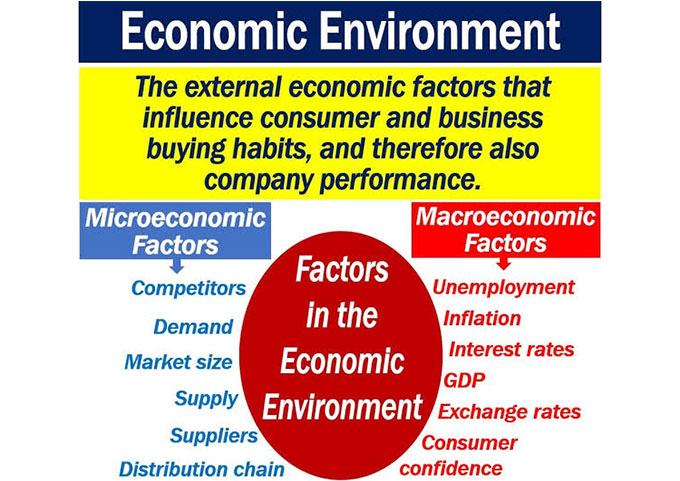
Gross Domestic Product (GDP): Assess the overall economic health of the country by examining its GDP growth rate. A growing GDP typically indicates a healthy economy, which is positive for businesses.
Inflation Rate: Understand the inflation rate, as high inflation can erode purchasing power, increase costs, and reduce consumer spending.
Unemployment Rate: Analyze the unemployment rate to gauge labor market conditions. High unemployment can indicate economic distress, while low unemployment suggests a robust labor market.
Interest Rates: Evaluate the prevailing interest rates set by the central bank. Interest rates affect borrowing costs for businesses and consumers, influencing investment and spending.
Exchange Rates: Consider the stability and level of the country’s currency exchange rates, especially if the business involves international trade. Fluctuating exchange rates can impact profits and costs.
Government Spending and Taxation: Analyze the government's fiscal policy, including its spending patterns and taxation levels. High taxes can reduce disposable income and business profits, while government spending can stimulate economic growth.
Monetary Policy: Evaluate the central bank's monetary policy, including interest rate decisions and money supply management. These policies influence inflation, investment, and economic growth.
Budget Deficit/Surplus: Understand whether the country is running a budget deficit or surplus, as this impacts the government’s ability to invest in infrastructure and social programs that benefit businesses.
Trade Agreements and Barriers: Examine the country’s trade policies, including free trade agreements, tariffs, and non-tariff barriers. These affect the ease of doing business, especially for import-export companies.
Foreign Direct Investment (FDI): Consider the level of FDI and the government’s stance on foreign investment. High FDI indicates a favorable business environment, while restrictions can limit opportunities.
Balance of Payments: Assess the country’s balance of payments, particularly the current account and capital account balances. Persistent deficits or surpluses can affect currency stability and economic policies.
Consumer Confidence: Look at consumer confidence indices, which reflect consumers optimism or pessimism about the economy. High consumer confidence usually correlates with increased spending.
Disposable Income: Analyze the level of disposable income among consumers, which affects their ability to spend on goods and services.
Demographic Trends: Understand demographic trends, such as population growth, age distribution, and urbanization, which influence market demand for various products and services.
Infrastructure Quality: Assess the quality of infrastructure, including transportation, communication, and energy. Well-developed infrastructure supports efficient business operations.
Technological Advancement: Evaluate the level of technological development and innovation in the country. Advanced technology can lead to increased productivity and competitiveness.
Education and Skill Levels: Consider the education and skill levels of the workforce, as this affects labor productivity and the ability of businesses to operate effectively.
Market Saturation: Analyze the level of competition and market saturation within specific industries. A saturated market may limit growth opportunities, while an emerging market may offer expansion potential.
Supply Chain Conditions: Evaluate the stability and reliability of supply chains, including the availability of raw materials, transportation logistics, and supplier relationships.
Regulatory Environment: Understand industry-specific regulations that affect costs, compliance, and market entry.
Global Economic Conditions: Consider how global economic trends, such as economic downturns or booms in major economies, impact the local economy. Globalization means that economic events in one country can have ripple effects worldwide.
Commodity Prices: If the country is a major producer or consumer of commodities, monitor global commodity prices. Fluctuations can significantly impact business costs and revenues.
Economic Stability: Assess the overall economic stability, including risks of recession, hyperinflation, or economic crisis. Businesses must be prepared for potential downturns.
Debt Levels: Understand the level of public and private debt. High debt levels can lead to financial instability and affect the availability of credit.
Political-Economic Risks: Analyze the interplay between politics and economics, such as how political decisions (e.g., sanctions, trade wars) might affect economic conditions.
PESTEL Analysis: Economic factors in a PEST (Political, Economic, Social, and Technological) analysis can provide a comprehensive understanding of the business environment.
SWOT Analysis: Evaluate the economic environment’s strengths, weaknesses, opportunities, and threats (SWOT) specific to your business.
Porter’s Five Forces: Use this framework to understand how the economic environment affects competitive forces within an industry.
Economic Reports and Forecasts: Regularly review reports and forecasts from credible sources like central banks, international organizations (e.g., IMF, World Bank), and financial institutions.
Economic Data Releases: Keep track of key economic data releases, such as GDP growth, inflation, and employment figures, to anticipate changes in the business environment.
To analyze the economic environment impacting businesses in a country, it is essential to look at a wide range of factors, from macroeconomic indicators and policies to industry-specific conditions and global trends. By combining quantitative data with qualitative insights, businesses can better understand the opportunities and risks associated with operating in a particular economic environment.
Copyright © 2024 The Winning Edge Mumbai, India. All Rights Reserved.